
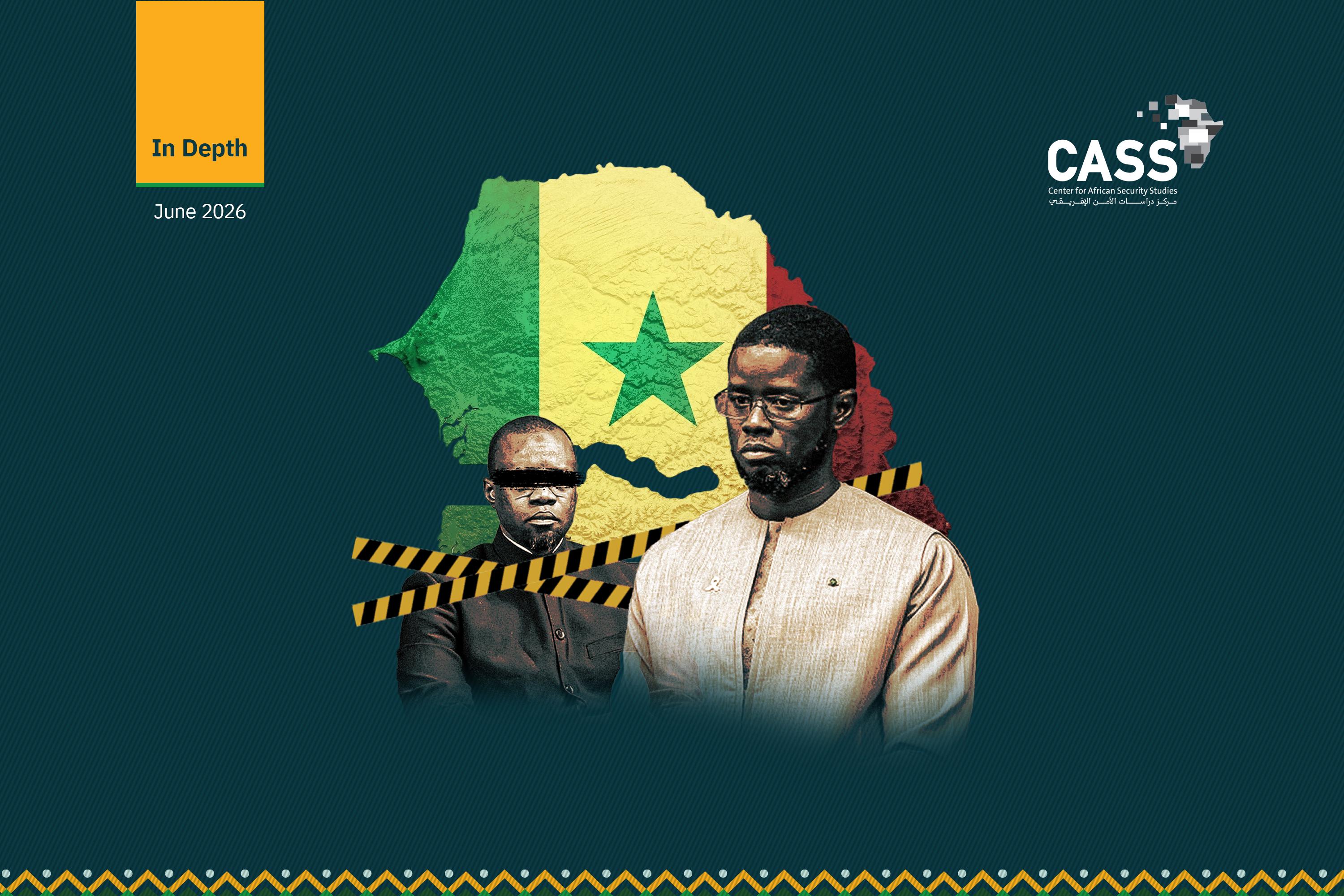
The presidential decree dismissing Prime Minister Ousmane Sonko and dissolving the government has put an end to the "dual-leadership" formula that had governed Senegal since the March 2024 elections.
This move has effectively terminated the structural political alliance within the ruling camp, opening the way for a new phase of power repositioning and escalating polarisation within the Senegalese African Patriots for Work and Ethics party (PASTEF), and across the country's political landscape more broadly.
This development came after months of quiet rivalry and diplomatic attempts to deny the existence of fractures at the apex of the executive branch, culminating in the justifications offered in late 2025 to placate the party's organisational base.
The structural roots of this rift trace back to the nature of the equilibrium that took shape during the final period of former President Macky Sall's rule. Sonko, as the most charismatic and popular figure on the Senegalese street, was barred from running for office following judicial rulings against him, which led the protest movement to put forward Bassirou Diomaye Faye as an alternative candidate governed by the principle that "Diomaye is Sonko."
The landslide victory produced an exceptional governing formula, with a president holding full constitutional and sovereign legitimacy, alongside a prime minister retaining organisational weight and populist symbolism within the party's institutions and its large youth bloc.
This executive duality carried within it the seeds of its own contradiction from the very first day of the consolidation of power, as visions diverged over who held actual authority and final say in formulating sovereign policies, complex economic files, and diplomatic relations with international partners.
The rift deepened as the government collided with the harsh logistical reality of staggering sovereign debt costs, the binding technical commitments of IMF programmes, as well as inflationary pressures and rising youth unemployment rates — all of which subjected the radical promises of structural reform to a rigorous and immediate test.
These complexities pushed decision-makers toward two divergent paths. President Faye gravitated toward an institutional approach relying on political pragmatism and bridge-building with financial institutions and traditional Western partners, France foremost among them. Sonko, by contrast, clung to a confrontational sovereigntist discourse premised on the concept of "economic and monetary rupture," threatening to review oil and gas contracts and confront foreign influence — thereby creating a duality in messages directed at markets and investors, and complicating efforts to achieve financial stability.
The dismissal reflects a decisive intent on the part of the Senegalese presidency to end the dispersal of decision-making authority and restore constitutional centrality confined to the institution of the presidency, on the grounds that the continued conflict at the summit had come to constitute a direct threat to state cohesion and the state's capacity to manage crises and creditor negotiations.
Nevertheless, this step carries high security and political risks, given the symbolic status Sonko holds among the youth constituencies and trade union movements that view his removal as a deviation from the promised revolutionary path and a retreat from the party's founding principles.
The dynamics of stability in the capital Dakar will hinge on the nature of the response adopted by the organisational leadership close to Sonko. Should they opt for de-escalation and working within party frameworks, this could lead to the crafting of quiet internal balances that preserve the cohesion of the ruling party procedurally.
A slide toward grassroots mobilisation and summoning the street, however, would place Senegal before a sharp polarisation that could translate into parliamentary defections and security tremors — at a moment when defence and security agencies are watching the scene with extreme caution, given the upheavals and military coups roiling the Sahel and West Africa.
On the economic front, the presidential orientation moves toward expediting the formation of a technocratic government capable of reassuring creditors and global markets, and of sending clear signals regarding the regular functioning of public services and the continuity of the country's international commitments.
The fundamental challenge will remain the ability of the new administration to pass reform packages and austerity measures without sufficient popular cover — which returns the conflict at its core to the question of the ruling project's identity: does it transform into a state of pragmatic institutions under Faye's leadership, or does it persist as a protest condition rooted in Sonko's charisma?