

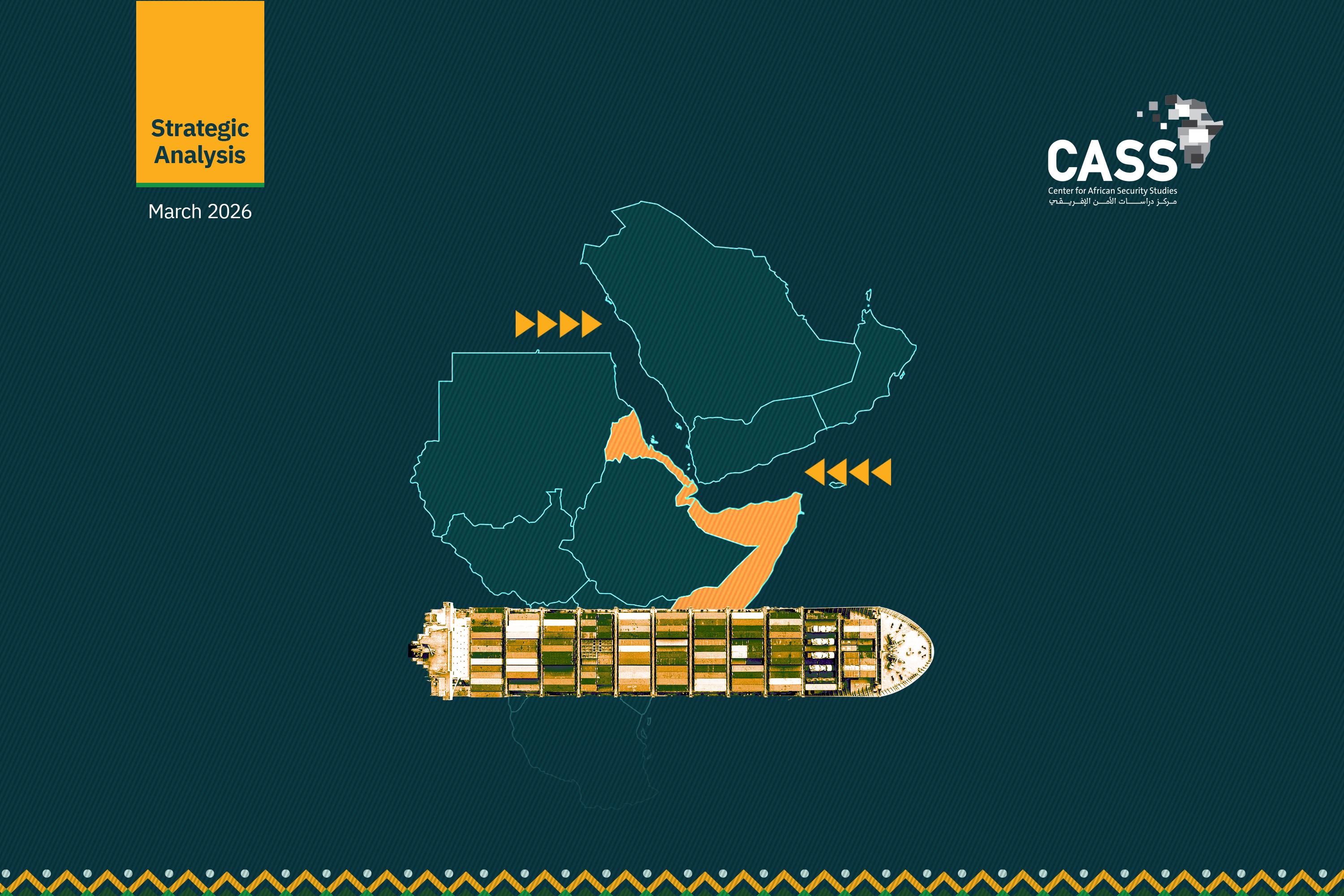
The Horn of Africa, particularly the area stretching between the Gulf of Aden and the Red Sea, is witnessing a notable surge in international interest in ports and maritime infrastructure in Somalia, Somaliland, and Djibouti.
This interest is attributed to rapid shifts in the regional and international geopolitical environment, as this region has come to represent one of the most important strategic nodes in the global trade system, due to its proximity to the Bab el-Mandeb Strait, through which a significant percentage of energy and goods trade between Asia and Europe passes.
The war on Iran has led to a renewed elevation of the strategic importance of Horn of Africa ports; with escalating tensions in the Red Sea and the Gulf of Aden, and increasing threats to navigation through the Bab el-Mandeb Strait, global shipping lines have become more vulnerable to disruption, prompting transport companies and concerned nations to re-evaluate their routes and secure alternative or more secure logistical anchor points.
In this context, the ports of Djibouti, Somalia, and Somaliland have gained double importance, not only as commercial stations but as logistical and military support nodes to ensure the continuity of trade movement.
At the same time, the war has led to increased militarization of maritime corridors, as international powers have strengthened their military presence to secure navigation, making these ports part of a broader security system rather than just economic infrastructure.
Ports in the Horn of Africa have emerged as arenas of competition between multiple international and regional powers. Major powers such as the United States and China seek to strengthen their presence to ensure the security of global supply chains, while regional powers such as the UAE, Turkey, and Qatar work to consolidate their influence through investment in infrastructure and port management.
This intersection has led to the transformation of ports into strategic anchor points used to enhance political and military influence, not just to achieve economic gains. This competition is also linked to broader projects, such as the Chinese "Belt and Road" initiative, which relies on developing ports and logistical corridors across strategic regions.
Djibouti gains a pivotal position in this equation, as it is currently the main center for trade in the Horn of Africa, especially for Ethiopia, which depends almost entirely on its ports to reach the sea. Djibouti has benefited from this location to develop its infrastructure with the support of international investments, especially from China, in addition to hosting a number of foreign military bases. However, this superiority faces increasing challenges, most notably the heavy reliance on a single partner, growing competition from alternative ports in the region, as well as risks associated with its transformation into an international military gathering point.
In contrast, Somaliland has emerged as a rising competitor in this field, especially through the development of the Port of Berbera, which is managed by an Emirati company. This port has gained increasing strategic importance as a potential alternative to Djibouti's ports, especially for Ethiopia, which seeks to diversify its maritime outlets. Furthermore, international interest in Somaliland is not limited to the economic aspect but extends to the political dimension, amid increasing discussions about its legal status and the possibility of expanding its international relations, which adds a new dimension to the competition equation in the region.
As for Somalia, despite possessing ports with great potential such as the Port of Mogadishu, its role remains relatively limited due to security, political, and structural challenges. Nevertheless, there are increasing efforts by international partners, especially Turkey, to develop these ports and reintegrate Somalia into the regional trade system. This reflects an international realization of Somalia's importance in the long term, despite current challenges.
The repercussions of this competition go beyond the economic dimension to include reshaping geopolitical balances in the Horn of Africa. Ports have become tools for redrawing regional alliances, contributed to complicating relations between Somalia and Somaliland, and introduced external parties into sensitive local interactions. Additionally, the increase in port investments has been accompanied by an expansion in military presence, which reinforces the trend of militarizing maritime corridors and increases the possibilities of indirect tension between competing powers.
In light of these data, it can be said that the region is heading towards a pattern of "competitive coexistence," where different ports continue to play varying roles within a regional network that is not fully integrated. Djibouti will likely remain the main center in the near term, while ports such as Berbera continue to strengthen their position as a rising competitor, whereas Somalia needs more time to achieve stability that enables it to fully benefit from its potential. However, the possibility of geopolitical escalation remains, especially if these ports are employed in the context of broader regional conflicts.
In conclusion, the increasing international interest in Horn of Africa ports reflects the region's transformation into a central axis in global interactions between economy, security, and politics. The future of these ports, and indeed the stability of the region as a whole, will depend on the ability of local and international actors to manage this competition in a balanced manner, preventing it from sliding into open conflict and allowing, at the same time, the utilization of the economic opportunities provided by this growing interest.