
The Global Terrorism Index 2026 was released at the end of March 2026, marking the thirteenth edition of this annual report.
The report is published by the Institute for Economics and Peace (IEP), an independent international think tank based in Sydney, Australia.
The report's significance lies in its comprehensive mapping of global terrorism trends and patterns over the past two decades, providing precise metrics based on incident counts, deaths, injuries, and hostage-taking to assess the impact of terrorism in 163 countries. It is a primary reference for policymakers and international organisations seeking to understand the geopolitical shifts in terrorism, identify emerging hotspots, and analyse the drivers of radicalisation — including youth radicalisation and the influence of border conflicts.
The State of Terrorism on the African Continent
Despite a marginal improvement recorded in sub-Saharan Africa in 2025 — with deaths falling by 23.5% and attacks declining by 28% — the region remains the most affected over the long term.
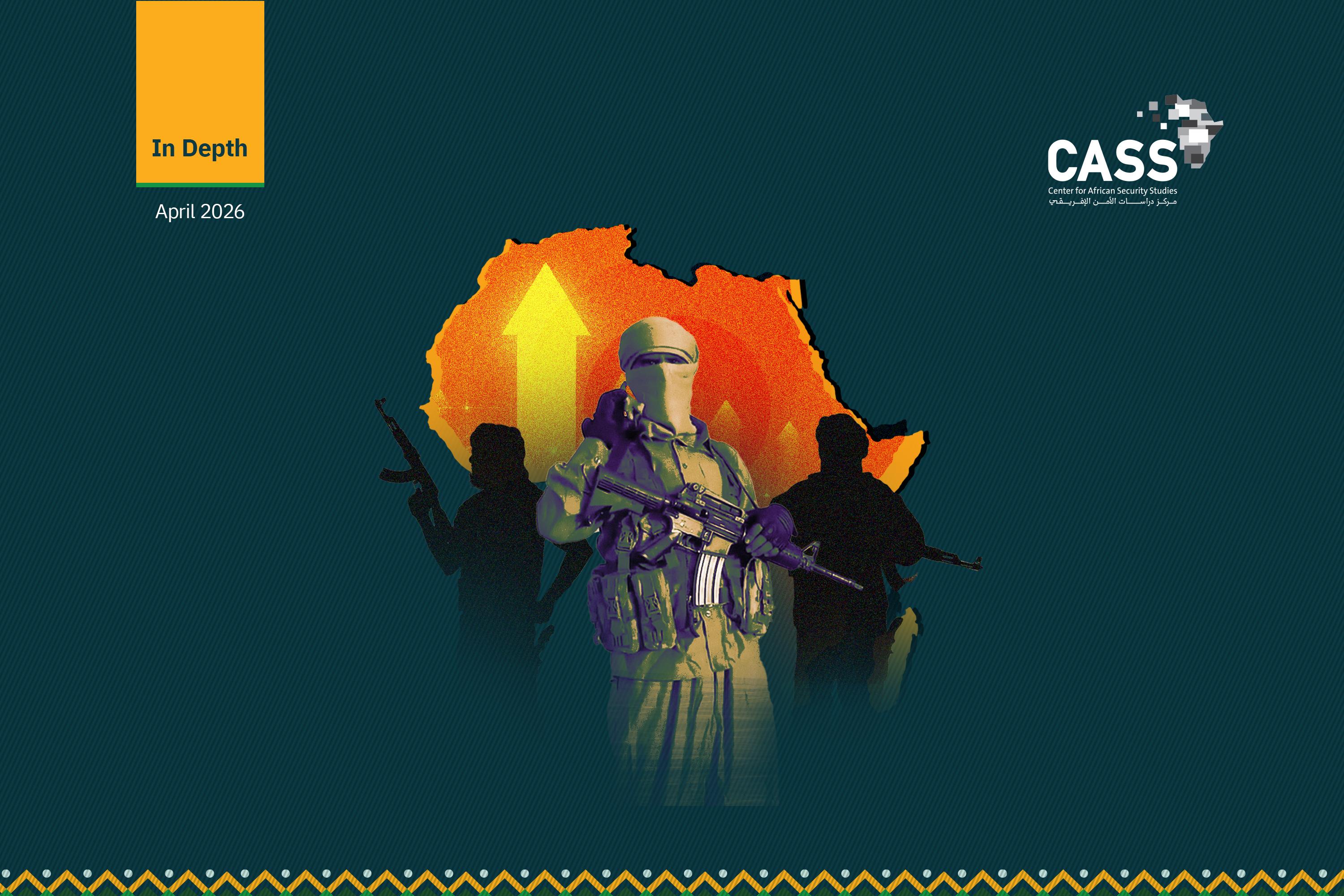
Since 2017, the global centre of gravity of terrorism has shifted from the Middle East and North Africa to the Sahel and sub-Saharan Africa.
While the Middle East and North Africa recorded a dramatic 93% decline in terrorism deaths between 2017 and 2025, sub-Saharan Africa saw an increase of 17% over the same period.
The Sahel: The Primary Flashpoint
The Sahel is currently the true global epicentre of terrorism, accounting alone for more than half of all terrorism-related deaths worldwide in 2025.
• Burkina Faso: Ranked second globally among the most affected countries. Despite registering the largest decline in deaths of any country worldwide — 45% (846 deaths compared to 1,532 the previous year) — the lethality of attacks actually increased, as terrorists shifted their focus to military targets.
• Niger and Mali: Niger ranked third and Mali fifth globally. Both countries have experienced border "authority gaps" that terrorist groups have exploited to move freely across territories.
3. Lake Chad Basin and Nigeria
Nigeria recorded the largest absolute increase in terrorism deaths in 2025, with a 46% rise bringing the toll to 750 deaths, returning the country to fourth place globally.
• Active groups: The Islamic State West Africa Province (ISWAP) and Boko Haram were responsible for 80% of total deaths in Nigeria.
• Cross-border tactics: Boko Haram operates across the tri-border zone of Nigeria, Cameroon, and Chad as though international borders do not exist, exploiting the difficult terrain of the Lake Chad Basin to evade security forces.
4. East Africa and the Democratic Republic of Congo
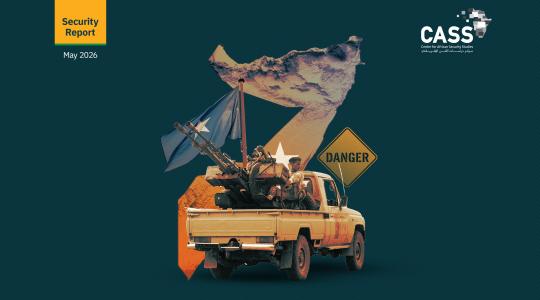
•Somalia: Despite a third consecutive annual decline in terrorism deaths — down 14% — al-Shabaab launched a major offensive (the Shabelle offensive) in early 2025, seizing government positions and advancing to within 50 kilometres of the capital Mogadishu.
• Democratic Republic of Congo: Recorded its worst ranking in the history of the index (eighth place), with deaths rising by 28% to 467 fatalities, carried out primarily by the Islamic State-affiliated Allied Democratic Forces (ADF).
5. Border Challenges and "Authority Gaps"
The report underscores that international borders in Africa constitute "security loopholes": 64% of attacks took place within 100 kilometres of a national border. Groups such as Jama'at Nusrat ul-Islam wal-Muslimin (JNIM) exploit these zones to train and recruit fighters beyond the reach of central state authority.
6. Drivers of Youth Radicalisation in Africa
The report highlights a fundamental divergence in the drivers of youth radicalisation between the West and Africa. While radicalisation in Western contexts is typically linked to social isolation, 71% of recruits in sub-Saharan Africa cited "human rights abuses by state security forces" as the turning point that led them to join extremist groups.
The report also notes that a quarter of volunteers joining these groups in Africa did so because of "the complete absence of employment opportunities".
7. The Most Impactful Terrorist Groups on the Continent
Four major groups dominate the landscape of violence in Africa:
1. Islamic State: Which doubled its operations in sub-Saharan Africa from 111 to 221 incidents in a single year.
2. Jama'at Nusrat ul-Islam wal-Muslimin (JNIM): The second deadliest group in the world, concentrating its operations in Mali, Niger, Burkina Faso, and Benin.
3. Al-Shabaab: Which remains the wealthiest al-Qaeda affiliate globally and functions increasingly as a "parallel state".
4. Boko Haram: Which continues to sow instability across the Lake Chad Basin.
8. Future Outlook and the Spread towards the West African Coast
The report warns that terrorism has begun spreading from the landlocked Sahel states towards the coastal nations of West Africa, such as Benin and Togo.
Benin recorded a significant increase in deaths in 2025, and deployed 3,000 soldiers along its borders to prevent the infiltration of armed groups from Burkina Faso and Niger.
The report concludes that confronting terrorism in Africa requires more than military solutions. The absence of basic services, security force abuses, and extreme poverty are the "structural drivers" that provide terrorist groups with a sustainable pool of recruits — making the security improvements recorded in some areas little more than a "temporary truce" if governance failures are not addressed at their root.